
Page last updated on May 27, 2026 at 10:22 am
What is a Bike Bus
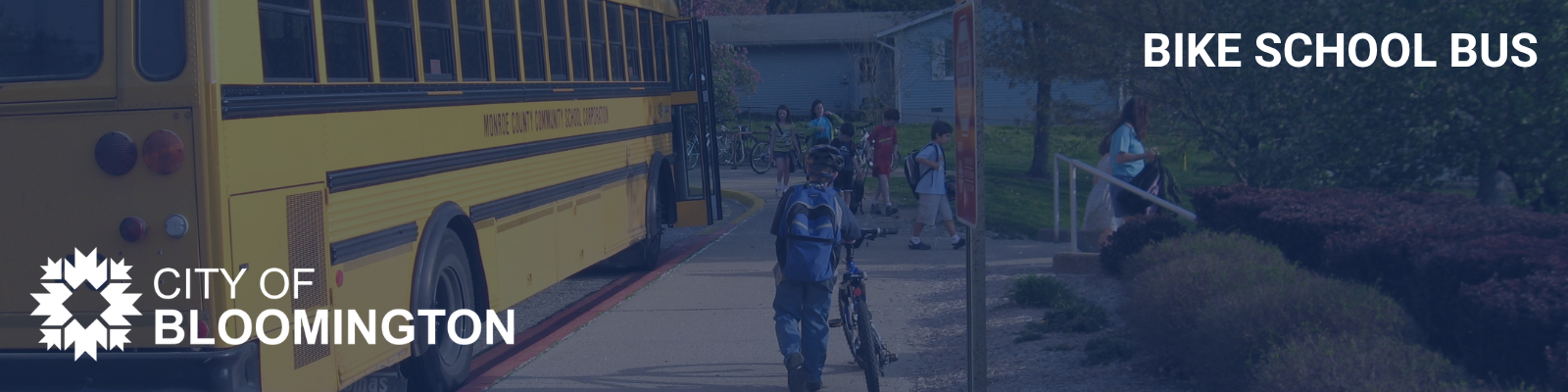
A Bike School Bus is a group of students who bike to and from school together with one or more adults. The group follows a planned route, typically with set meeting spots where students join along the way. The group bikes safely to school together, and then usually bike home using the same route. Some groups bike every school day, while others meet once or twice a week.
This form is for parents who are interested in leading or joining a Bike School Bus. Your answers will help us connect families who live near each other.
Bike Bus Interest Form
The City of Bloomington can help match families, plan your route, provide supplies (like bike lights, vests, and ponchos, etc.), and even bike with you the first time to help you get started.
The form can help you lead or join a bike bus.
- Lead a Bike School Bus:
You are a parent who is willing to bike with a group of students at least once a week. You may share this role with other parents. - Join a Bike School Bus:
You want your child to take part in a Bike School Bus, but you will not be walking with the group.
Starting Your Own Bike Bus
Bike buses can be simple or structured. They may involve just two families rotating supervision, or a formal route with trained volunteers. Routes might pick students up at homes, parks, or intersections, and may run before school, after school, or both.
Determine Interest
Many bike buses begin informally with parents and neighbors talking with each other, noticing who already walks to school, and inviting others to join. A quick conversation at drop-off, a text thread, or a group chat is often enough to get things going. More formal options are also available. Interested families can complete the Bike Bus Student Registration Form* to help identify routes and participants. Typically interested parents provide the intersection nearest to them, not their full address. The City of Bloomington can also assist by creating route maps and sharing contact information so families can connect and coordinate more easily.
Determine Dates, Times, and Routes
How often the bike bus will operate (daily, weekly, or monthly) and determine pick up times and locations (intersections, parks, landmarks, or individual student homes). The City of Bloomington can assist with developing a map to distribute. Not every school or home will have safe access to a bike bus and in those cases a walking school bus, schoolpool, or park and walk may be more appropriate. Ride the route to figure out how long it’ll take, and when you’ll depart each stop. Keep your pace at 4-8mph. Aim for 5-10 minutes before doors open.
Work with Others:
Identify adults willing to supervise and clarify their level of commitment. Programs with more route leaders tend to reach more students and be more sustainable. Develop a means of communication (often a group chat) for all caregivers and route leaders. Set clear expectations, including how to report absences or changes. Work to determine how to handle weather, cancellations, or volunteer absences and how to accommodate students with after school activities.
Preparing Students to Bike:
Preparing students for a bike bus is simple, but consistency and safety matter.
- Confirm that each student has a helmet
- Confirm that each student’s bike has a front and back bike light
- Confirm every student understands the basics of group riding (no passing, no sudden stops, ride as a group not single file)
- If possible, have new riders practice riding in a group in a low-stress setting (i.e. a parking lot) before joining the bike bus.
- Understand where students will park their bikes at school and if bike locks are needed
5. Running a Bike Bus:
- Typically, a bike train should have at least two adults with one at the front of the train and another in the back to make sure everyone rides together.
- Do not assume students are experienced riders (pacing, staying in line, knowing to check their surroundings, stopping at intersections, knowing how car drivers behave)
- Use shared use paths, sidewalks, and low-traffic roadways
- If you are on the road, cars should stay behind you. Do not move over to let cars pass. Move as a blob, not a single file line, and occupy the roadway.
- For larger intersections, you may want to “cork” the intersection meaning placing an adult between the cars and the students crossing the intersection.
- For all intersections, consolidate the group and aim to cross together as a unit.
Parent Resources:
- Children Learn to Ride Guide
- Family Biking Mini-Guide
- Safe Routes How to Start a Bike Train Mini-Guide
Work with the City
The City of Bloomington can help you start your walking school bus. Reach out for help or view several resources available to support walking school buses:
- Choosing Safe Routes
- Temporary signage for stops
- Wayfinding signage for routes
- Safe walking materials package including
- High-visibility safety vests
- Bike Lights
- Hand outs, posters, and parent information sheets
- Staff assistance for your first ride
- Walking school bus training for yourself or your school
- Give-away incentives
- Presentations for PTA, teachers, or parents